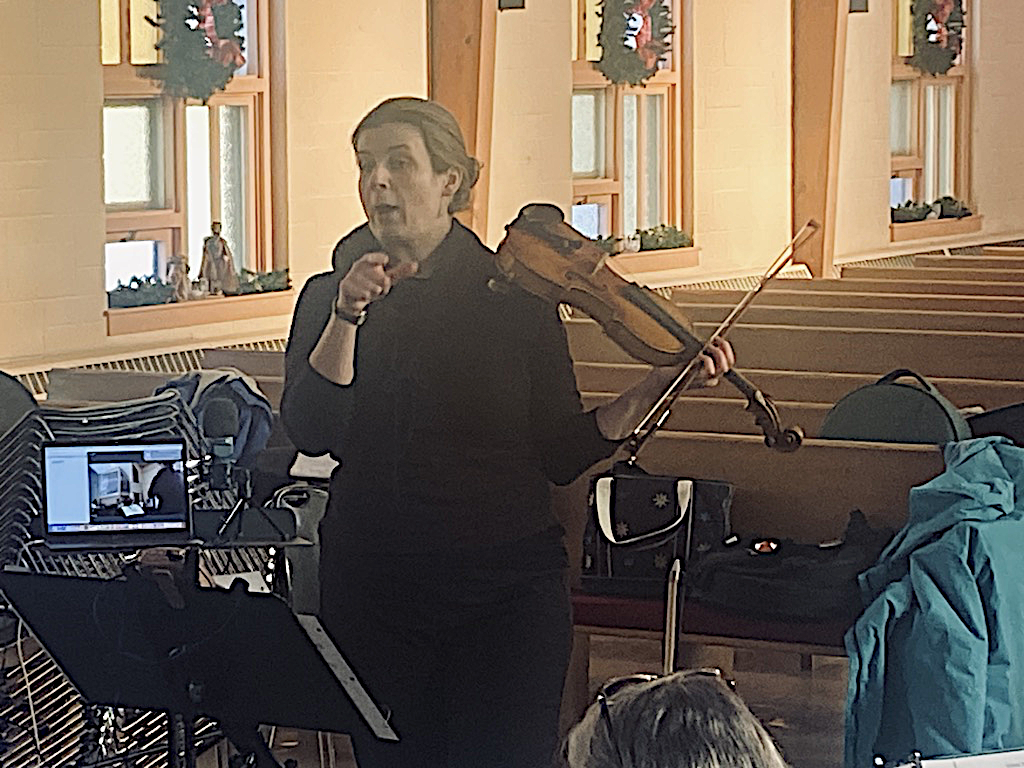
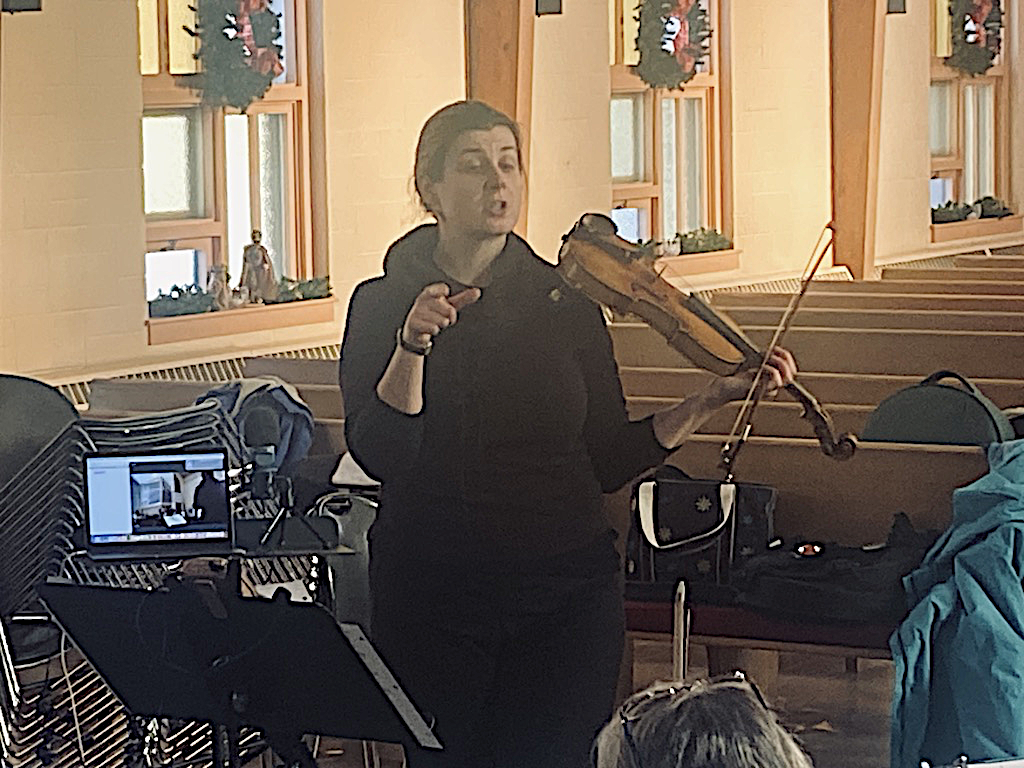
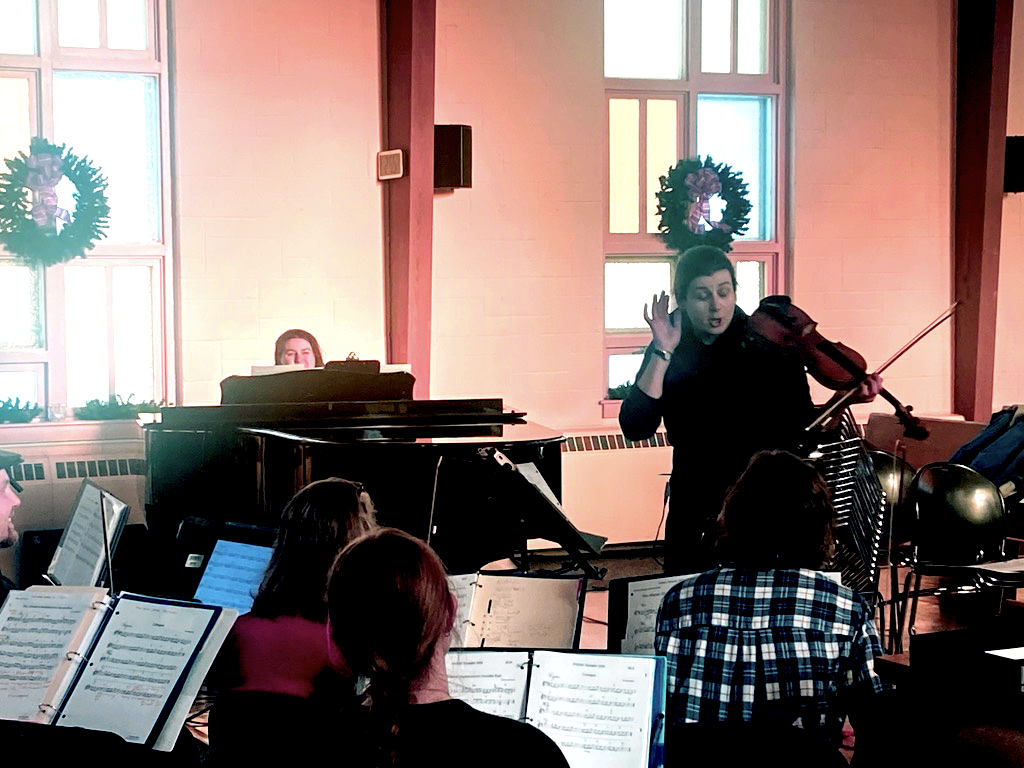
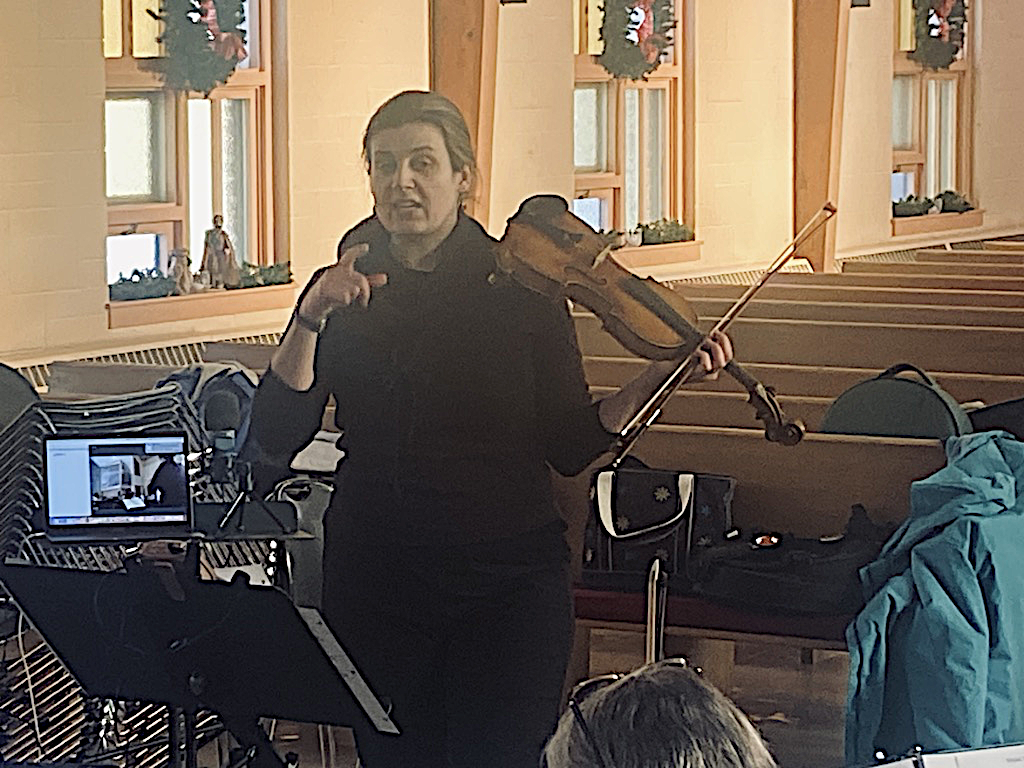
Mari Black Workshop Summary
December 15, 2025
We asked Mari to help us focus on improving our playing as a group. She offered two suggestions for player inputs:
Praise: what is the thing you like the most?
Requests: The one thing that would most improve the entire performance.
For requests, it is important that it be something actionable. And, if requests overlap, this can be taken as an indication of importance.
She talked about finding the groove. No matter what the rhythm is, the groove is basically a two-measure phrase:
2/4 or 4/4 time STRONG | weak | Medium |weak ||| STRONG | weak | Medium |weak
¾ time STRONG | weak | weak ||| Medium | weak | weak
Waltzes may sometimes have more of a four-measure phrase) . The melody will provide guidance.
This of course is a broad framework. It should be obvious with a particular tune if there should be a deviation from this.
There was also a “map” suggested for dynamic variations, such as when playing a tune twice through:
Mezzo forte – Medium loud for the first time through the tune and Forte-loud for the second time. Within this framework the second time through the tune the A Section can be very soft and the B Section much louder. The tune should determine how much detail you add from this basic formula.
For string players how much bow you use will determine speed and dynamics. Use more very small amounts of bow for more speed. The idea is to create tensions and then resolve them so that the phrase doesn’t plod along, but has life and is danceable. Think in terms of waves, water flowing in and retreating.
Follow the melody line to help determine if you want the music to get louder or softer. Usually if the melody is ascending the volume gets a bit louder, descending melody it gets softer. But this is not always true. It depends on the mood you want to achieve. It can be just the opposite, or very loud for a longer or shorter phrase or very soft for a longer or shorter phrase.
Mari stressed the importance of dynamics being for everyone: one person can ruin it! This should be a focus of rehearsals.
You can add a different ending (or a lift elsewhere in the tune) by changing a few notes. She used the delightful term “popping the register.” This involves playing a different note, within the chord, usually higher, but can be lower depending on what the feeling is.
When a tune appears to be very simple, there needs to be more thought given to the texture. Where are we going to work the dynamics even more and observe rests and breath marks? Note how other instruments can make these changes. Chord changes relate to a change of mood and a change in how that part is played. She suggested a simple example of substituting a 6 minor chord for the 1 (tonic) chord, perhaps just the last time through a phrase. Of course chord substitutions (and they can be more complex than this) must be very specifically indicated and rehearsed.
At the beginning of our session Mari explained that we would be playing the tunes at speed. There is a tendency to want to introduce a tune by rendering it slowly, but she noted that the flavor of the tune could be negatively impacted by this. Better to play it up to speed, and just skip notes if you can’t get them all in. This can be done when there is an orchestra, but it is also viable for solo playing. The audience is not likely to notice a skipped note, but they will certainly hear a botched attempt to try to play everything if you’re not there yet.
She talked about:
Practice (done solo, where you can play slowly)
Rehearsing - up to speed, fine tuning
Performance - which of course will never be perfect, but the tools she provided in this workshop will clearly help the Scottish Music Club to improve our performance.